 (803) 371-2080
Glass guide ·
How Long Before You Can Drive After a Windshield Replacement?
Safe drive-away time is not a courtesy guideline — it is the point at which the urethane can hold your windshield in a crash. Here is what changes it and what to do for the first 48 hours.
What safe drive-away time actually means
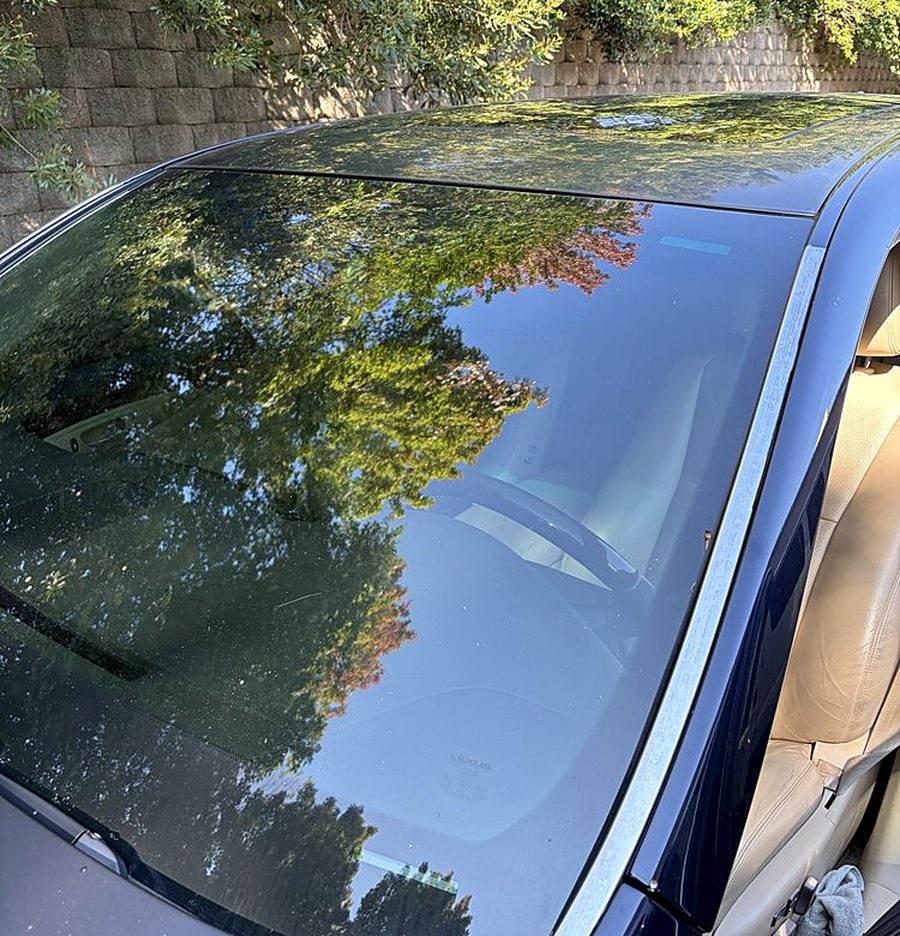
Your windshield is not held in by clips. It is bonded to the body with automotive urethane adhesive, and that bond is structural. In a frontal crash the passenger airbag deploys against the inside of the windshield and uses it as a backstop. In a rollover, the bonded glass is a significant part of what keeps the roof from collapsing.
Safe drive-away time is the point at which the urethane has cured enough to survive that. Before that point, the glass is sitting in place but the bond will not hold under load.
Why nobody can give you one number
Cure rate depends on the specific urethane, the ambient temperature and the relative humidity — these adhesives cure by reacting with moisture in the air.
A humid August afternoon in Rock Hill cures far faster than a dry 40-degree morning in January. The same product, the same job, materially different waiting times.
Bead size and the vehicle's airbag configuration change the requirement too. This is why a shop quoting you a flat 'one hour, always' is quoting marketing, not engineering.
We give you the actual number for your job, on the day, before we leave.
The first 48 hours
Leave a window cracked about half an inch for the first day. Slamming a door in a sealed cabin spikes the internal pressure and can push a fresh bead out of position.
No car washes, and especially no high-pressure or automatic washes, for at least 48 hours.
Leave the retention tape on for as long as we tell you. It is holding mouldings, not the glass, and it looks temporary because it is.
Avoid rough roads and speed bumps where you reasonably can on day one.
Some fogging or a faint adhesive smell in the first day is normal and clears.
When to call us back
Any water intrusion at all, however small, after rain or a wash.
A wind whistle at highway speed that was not there before.
Mouldings lifting, or a gap you can see daylight through.
A dash warning for a driver-assist system appearing in the days after the job.
None of these are things to live with. Call (803) 371-2080 and we will come back out and look at it.
Twenty-eight years in this trade teaches you that almost every glass job that goes wrong goes wrong in the prep or the cure, not the glass. That is where we spend the time.